
Insights
Grid-Forming Inverters in Australia: Technical and Economic Insights
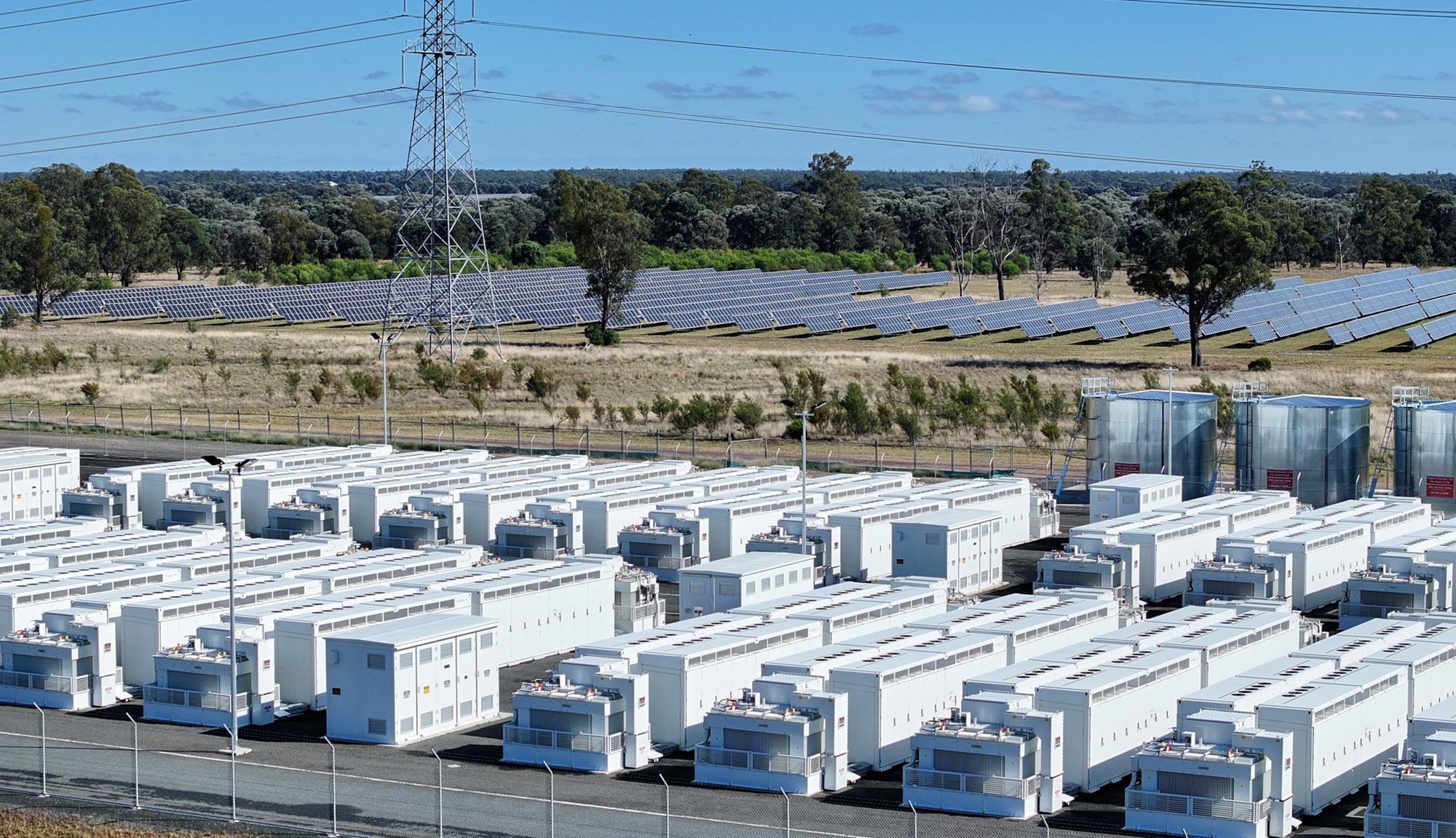
Grid-forming (GFM) inverters represent a fundamental technological shift for power systems operating with high shares of renewable energy. As synchronous generators retire, traditional sources of system strength and inertia are progressively reduced, creating new technical challenges for grid stability, fault response and frequency control.
In the Australian National Electricity Market (NEM), grid-forming technology has moved rapidly from pilot projects to large-scale deployment. As of late 2025, ten grid-forming battery energy storage systems (BESS) were operational, providing approximately 1,070 MW of GFM-capable capacity, with a further pipeline of 94 projects identified by AEMO. This makes Australia one of the most advanced markets globally in the adoption of grid-forming inverter technology.
Grid-forming inverters: operating principles and benefits
Unlike conventional grid-following (GFL) inverters, grid-forming inverters do not rely on an existing grid voltage reference to synchronise their output. Instead, they autonomously establish voltage and frequency at their connection point, operating as controlled voltage sources.
Through advanced control algorithms, grid-forming inverters emulate key characteristics of synchronous generators, including virtual inertia, frequency droop response and reactive power control. This enables them to actively stabilise the grid, rather than passively injecting current based on an external voltage signal.
This control philosophy delivers several interconnected benefits. Grid-forming inverters provide system strength by contributing fault current and stabilising voltage in weak-grid conditions, supporting reliable protection relay operation. They also deliver synthetic inertia and fast frequency response, mitigating the risks associated with declining synchronous generation. In addition, their autonomous voltage regulation capability enhances overall grid stability and enables advanced functionalities such as black-start and operation in islanded mode.
Grid-forming versus grid-following technology
The distinction between grid-forming and grid-following inverters is particularly relevant in networks with low short-circuit ratios. Grid-following inverters depend on phase-locked loops to remain synchronised with the grid voltage. In weak or disturbed networks, this dependency can lead to loss of synchronisation and inverter tripping, exacerbating system instability.
Grid-forming inverters, by contrast, maintain their own voltage reference and dynamically adjust reactive power and frequency response based on grid conditions. During voltage sags or system disturbances, GFM inverters actively inject current to support the network, creating a self-stabilising control loop that does not depend on external voltage quality.
Technical trade-offs and lifecycle considerations
While grid-forming technology offers substantial system-level benefits, it also introduces specific technical considerations. The more complex control algorithms associated with GFM operation result in a small efficiency penalty, typically below 1% when compared to grid-following operation. However, this impact is generally outweighed by the additional value generated through improved grid stability, higher renewable integration and avoided system strength remediation costs.
The long-term impact of grid-forming operation on inverter lifetime is an area of ongoing analysis. Because GFM inverters actively respond to grid disturbances and provide synthetic inertia, they may experience increased thermal cycling compared to grid-following units. At present, field data remains limited, and most manufacturers continue to offer similar warranty terms for both GFL and GFM technologies.
Economic drivers and regulatory context
One of the most significant developments in recent years has been the convergence of hardware costs between grid-forming and grid-following inverters. For new utility-scale BESS projects, the historical cost premium associated with GFM technology has largely disappeared, driven by firmware-based implementations and increased production volumes.
As a result, the primary cost differences are now related to commissioning complexity, system modelling and validation requirements. From an economic perspective, grid-forming inverters can deliver substantial value by avoiding or mitigating system strength charges under the NEM’s Efficient Management of System Strength (EMSS) framework, particularly for projects connecting to weak-grid locations.
Outlook for grid-forming BESS deployment
Australia’s experience demonstrates that grid-forming inverters are becoming a standard design choice for new battery storage and hybrid renewable projects. As regulatory frameworks evolve and operational experience increases, GFM technology is expected to play a foundational role in ensuring secure and reliable operation of power systems with very high renewable penetration.
Download Our Whitepaper on Grid-Forming Inverters in Australia: Technical and Economic Insights
Fill out the form to access our in-depth whitepaper that provides a detailed technical and economic assessment of grid-forming inverter deployment in the Australian market, including control principles, system strength implications, cost evolution, and regulatory considerations.